Enchanted Hour
Welcome to my collection of production art from Walt Disney and Western animation studios.
About | Definition | Updates: July 8th, 2026
© Part of the La Paisible Collective.
1938
Wynken, Blynken & Nod
1940
FANTASIA
1950
CINDERELLA
1953
PETER PAN
1957
THE TRUTH ABOUT MOTHER GOOSE
1959
SLEEPING BEAUTY
1963
THE SWORD IN THE STONE
1995
POCAHONTAS
2009
CORALINE
© Part of the La Paisible Collective.
I dreamed of being a traditional animator one day. Though my career has taken a different path, I can still remember how Disney films profoundly affected me as a person from infancy to adulthood. Thanks to my mother, who bought me tapes filled with classic cartoons, I grew up with Popeye the Sailor Man, Casper the Friendly Ghost, Merrie Melodies shorts, and various Terrytoons cartoons. Eventually, Don Bluth’s films became part of my nostalgia. And Cartoon Network broadened my horizons with other great classic series and films.
Favorite Films & Shorts


The Goddess of Spring — Part of the Silly Symphony series, the story follows how the relationship between Persephone and Hades transpires and changes the way seasons work. This short had a larger budget because the animators were testing human movements to prepare for the production of Snow White and the Seven Dwarfs.Fantasia — I would constantly play my mother’s copy of Fantasia in laserdisc, particularly the segment where Chernabog, the maestro of the dark, descends to his slumber as the robed monks sings Ave Maria in the forest. It was one of the most enchanting visuals I had ever seen, and it still touches me till this day.Sleeping Beauty — This is one of the VHS tapes from my early childhood, and I had the pleasure of letting my physical therapist borrow it (I had a lot of leg problems as a kid), and in return, she loaned me Mary Poppins. Sleeping Beauty is unique; I loved the sophisticated tone and gorgeous music, but Aurora really stood out to me. Despite her falling hard for Prince Philip, she chose her guardians/family over him, though in deep depression, she powered through and eventually got her prince. Her resilience amazed me.
FAVORITE CHARACTERS
Harp

Katrina Van Tassel
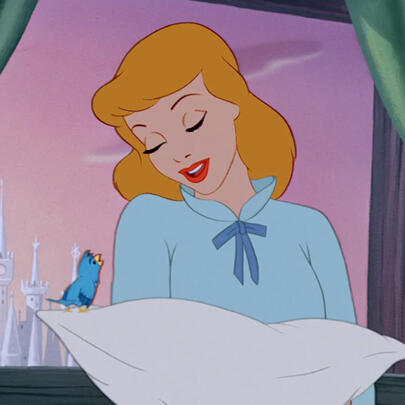
Cinderella
Dinah
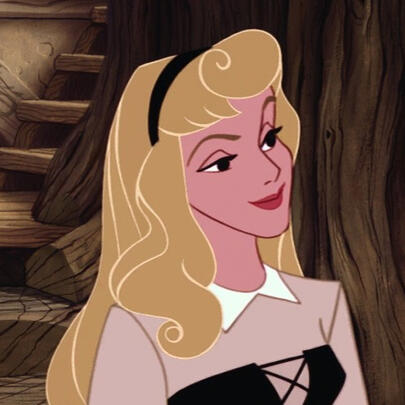
Aurora/Briar Rose
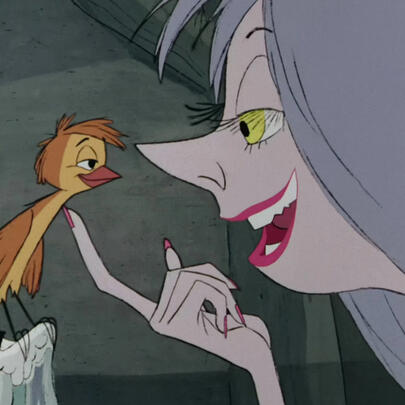
Madam Mim
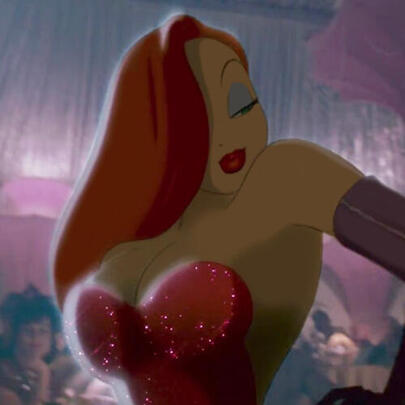
Jessica Rabbit

Ariel
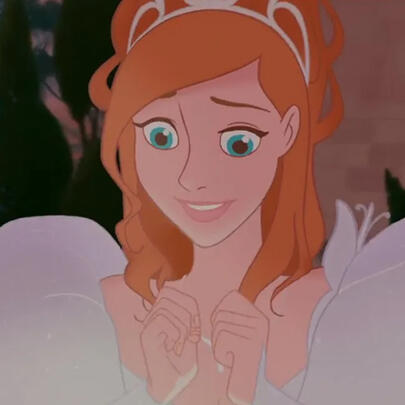
Giselle


ANIMATION BOOKMARKS
The Walt Disney Family Museum
preserving the legacy of Walt DisneyDeja View
a blog by animator legend Andreas Deja2719 Hyperion
a blog on Disney historyVintage Alice in Wonderland
a blog by Disney historian/collectorJodi Benson
the official site of voice actor Jodi BensonMargaret Kerry Tinker Bell
a tribute to Margaret KerryCartoon Brew
up-to-date news on animationCartoon Research
commentary on classic animationClear Black Lines
fansites to Disney films and moreI'm Not Bad
a tribute to Jessica Rabbit
© Part of the La Paisible Collective.
July 8th, 2026 — The gallery has been revamped to exclusively Walt Disney and Western animation production artwork. Here's an update of acquired new pieces:
A long wish-list of mine came true, a Silly Symphony favorite with a custom background.An obscure short The Truth About Mother Goose featuring Mary, Queen of Scots.A minor character from Peter Pan's Mermaid Lagoon, which is also signed by legend June Foray.I can't resist Madam Mim in her beauty form. So far, I have two.Alas, twelve props that was screen-used from my favorite stop-motion film, Coraline.All the old copy from the collections has been revised with a more current and fresh perspective.- x, Cece
June 11th, 2026 — The model and actress of Tinker Bell, Margaret Kerry, has passed away. I recall vividly when I met her once at the D23 convention in 2022 where she signed for fans at one of the vendor stalls, she took time to speak with each fan but one of the highlights was a Tinker Bell cosplayer, it was a sight to witness of Kerry laughing and grinning with her; a fan who dressed in impeccable details of the very character Kerry helped create. I am in deep gratitude to have met her, what an absolute legend.My signed pieces are still displayed in my cabinet, when I have the time, I'll add them to the gallery section.- x, Cece
January 22nd, 2026 — Ron Stark, a pioneer of animation restoration and founder of S/R Labs, has passed away. I had the pleasure of bidding and coordinating with Mr. Stark since the beginning of my animation art collection.
"It is with deep sadness that I share the news of the passing of Ron Stark, founder of S/R Labs and an early pioneer in Animation Cel collecting and restoration.It was through his early involvement in ASIFA and his auctions at S/R Labs in the 1980s that helped me to build my own collection and eventually make my hobby a career.Ron was active with his auctions and restoration services up until his death and will be missed."- Mike Vaton of Van Eaton Galleries
He was very passionate about archiving and preserving art. I have a funny memory when they accidentally shipped me a production drawing and of course, I had to ship it back. Among my favorite pieces that I had purchased through S/R Labs were these beautiful centaurette drawings. Mr. Stark had an enormous personality and made a mark in animation art forever. He will be missed.
- x, Cece
April 4th, 2024 — The gallery is now live.
- x, Cece
© Part of the La Paisible Collective.
Here is a brief overview of animation art, primarily Walt Disney, and how the studio defined production pieces.
Backgrounds
Production Background: A painted background that was used in the film. The background was used and recorded for the film. It is exactly what you see on the screen.Preliminary Background: A painted background that was not used in the film. It was made during the creation of the film but did not make the cut.Key Master Set-Up: The set-up is composed of the production cel or cels with their matching production backgrounds. The cel and background appear at the same time in the final film.Master Set-Up: The set-up is composed of the production cel or cels with their production background. However, it does not appear together at the same time.
Celluloid
Production Cel: A clear sheet made of acetate or nitrate. These transparent sheets are hand-painted and then placed on the production background to be photographed.Courvoisier: In the early 1930s, the Courvoisier Galleries created their own cel set-ups that were composed of a production cel that was trimmed and applied with glue to a unique background: watercolors, polka dots, and wood veneer. The final set-up was framed in a mat with a label authenticating that “This is an original painting on celluloid, actually used in the Walt Disney Production.” The set-ups ended in the early 1940s.Disneyland Cel Set-Up: Like the Courvoisier cel set-up, Disney trimmed the production cel sheet and set it in a mat over a print background. There would be a red-and-gold 2.5” x 4” Disneyland label on the back of the mat. These were distributed to Disneyland shops from the 1950s to the early 1970s.Model Cel: A transparent cel of a character that is hand-painted with accurate colors. Sometimes the test colors show differently on the final design.
Drawings
Key: Production drawing by the supervising animator, the drawing would have a small chart on the corner indicating the time and speed of the movement.Rough: Production drawings by an animator are used to establish position and style, often drawn in a relaxed style.Production Drawings: Either a production drawing or a clean-up drawing, these are created by referencing the rough drawings. The clean-ups are used to create production cels.Layout: Comprehensive production drawings of the background would also indicate camera movements and where the characters would be placed.Model Sheets: Original drawings depict characters in various positions and angles. These would be copied and distributed to animators.
Conceptuals
Concept Art: The concept piece is an early development of the film. The artist would design a visual representation of a character, landscape, item, or a composition of anything else.Storyboard: Small panels depicting a scene with relaxed illustrations showcasing character development, dialogue, and overall redefining the storyline.
Maquettes
Maquette: Often, the final design of a character is molded and sculpted for the animators to use to see all the various angles. The production of maquettes was limited due to the exact number of animators.
© Part of the La Paisible Collective.
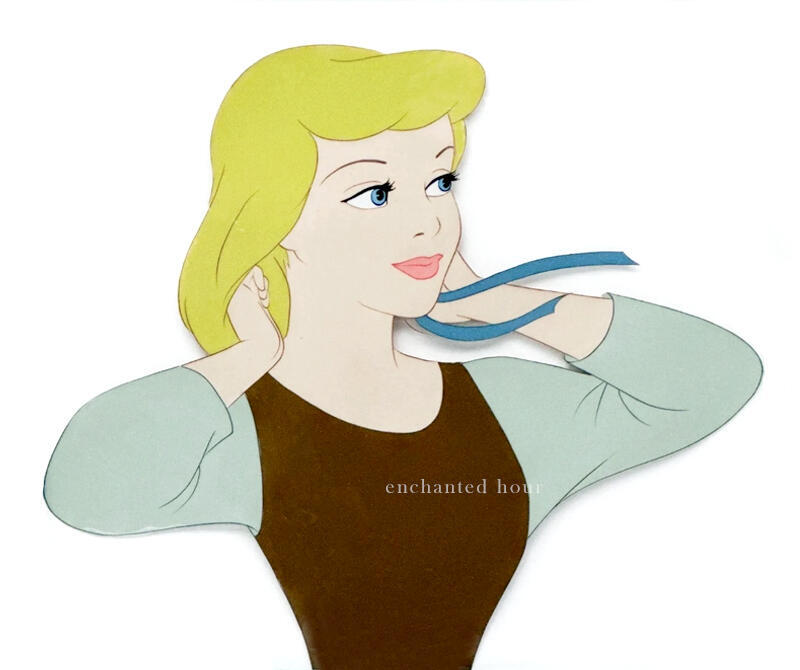
Cinderella
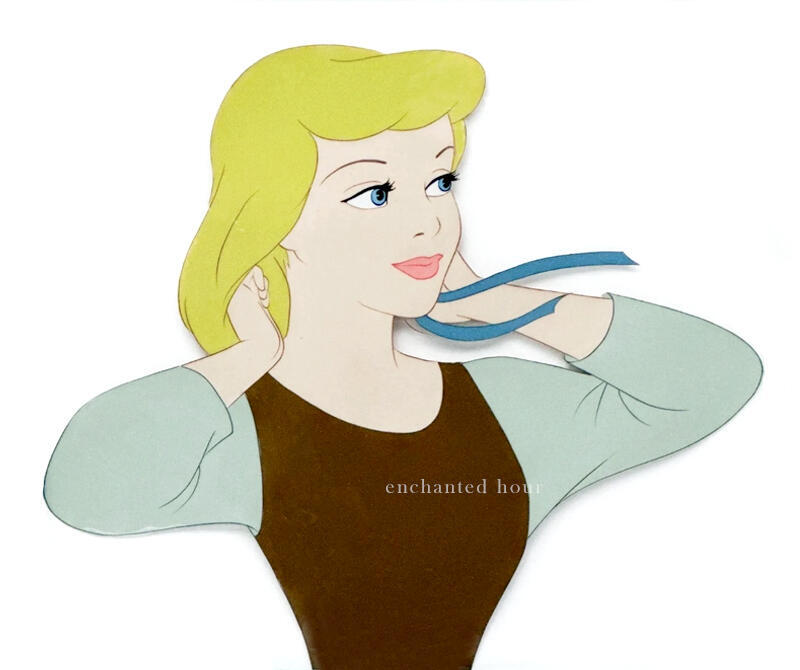
Type: Original Production Cel
Studio: Walt Disney
Year: 1950
In seconds of my impressions upon this production cel, the hairs stood up from my arms, and my heart rate beat at the speed of a mouse’s. Cinderella is a rare title character; very few selections of her will show up in the market, while there is a healthy amount of Briar Rose, Ariel, and sometimes Snow White—only Cinderella will show up a few times, and almost none for a couple of years.
Supervising Animators of Cinderella
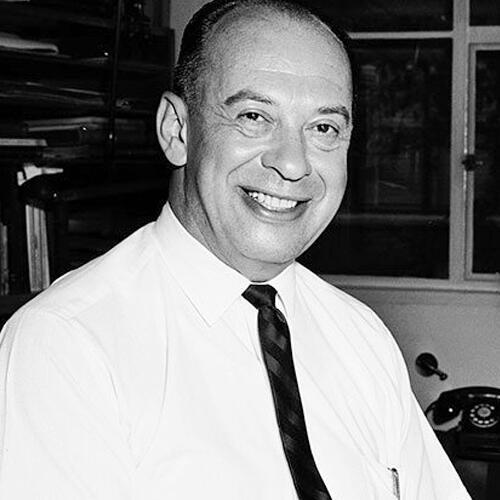
Marc Davis

Eric Larson


The two supervising animators of Cinderella were Eric Larson and Marc Davis. Laron is the first to supervise the title character; he imagines her as sweet and bashful. Later, Davis joins Larson as one of the leads, and both have conflicting perceptions of Cinderella’s qualities. Davis preferred an intelligent, witty, and strong leading lady. The combined views made Cinderella a woman of kindness but no pushover. She will free mice from traps, but she will give Lucifer a good whooping if he causes trouble for her. She gets bullied by her stepfamily, yet finds humor in it all.
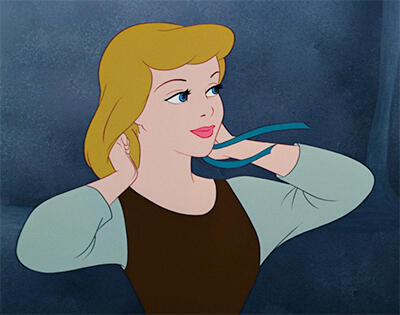
One of the many scenes that Larson is responsible for was the morning sequence where Cinderella sings “A Dream is a Wish Your Heart Makes." This very cel came from the scene where Cinderella ties her hair with a blue ribbon presented by her bird friends, donning handmade headscarves that she made for them.
Sources: Walt Disney.org, 50 Most Influential Disney Animators
© Part of the La Paisible Collective.
Fantasia
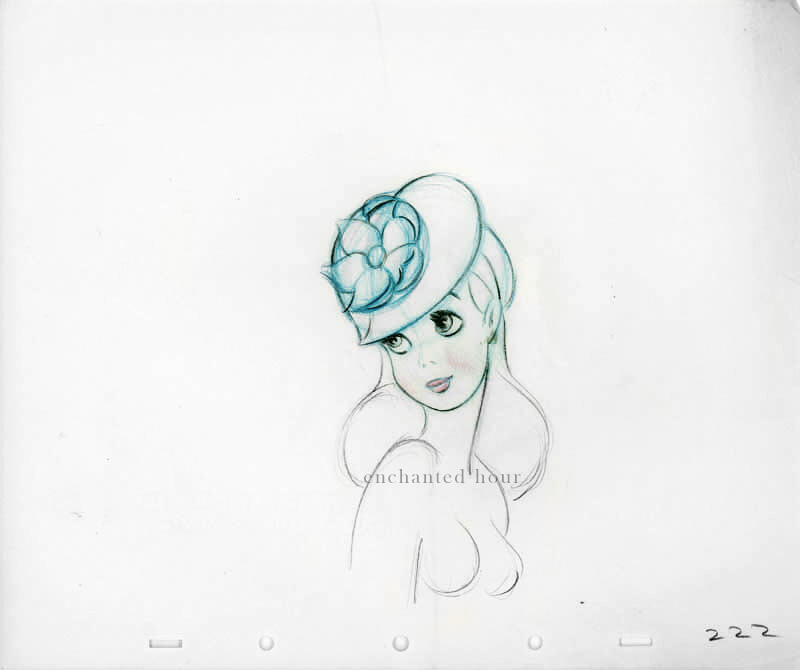
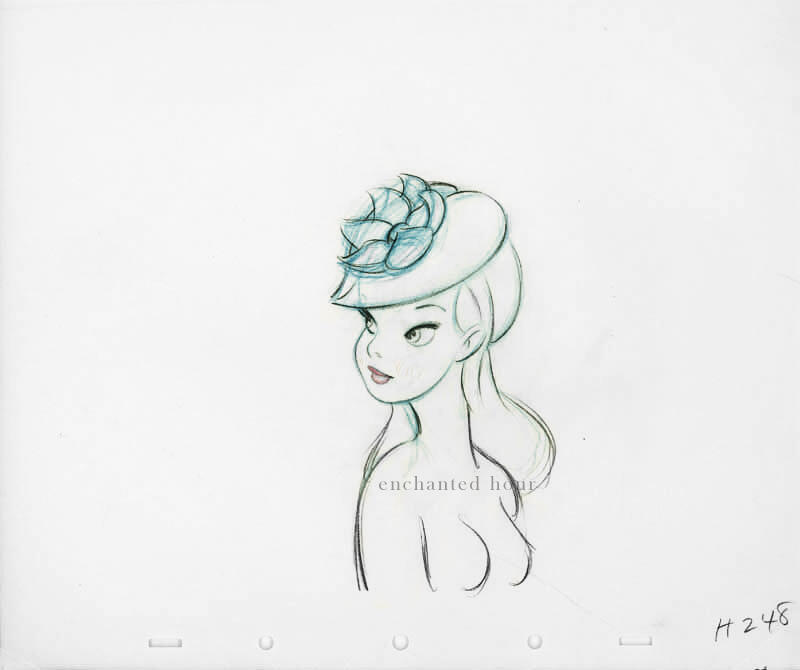
Type: Original Production Drawings
Studio: Walt Disney
Year: 1940
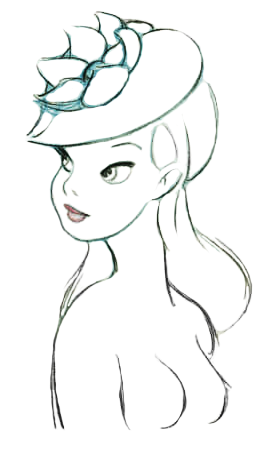
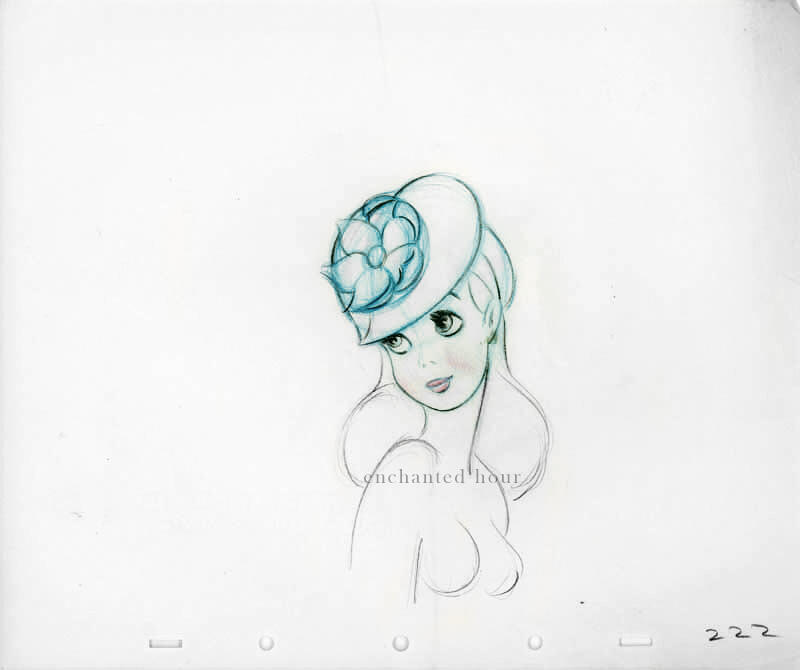
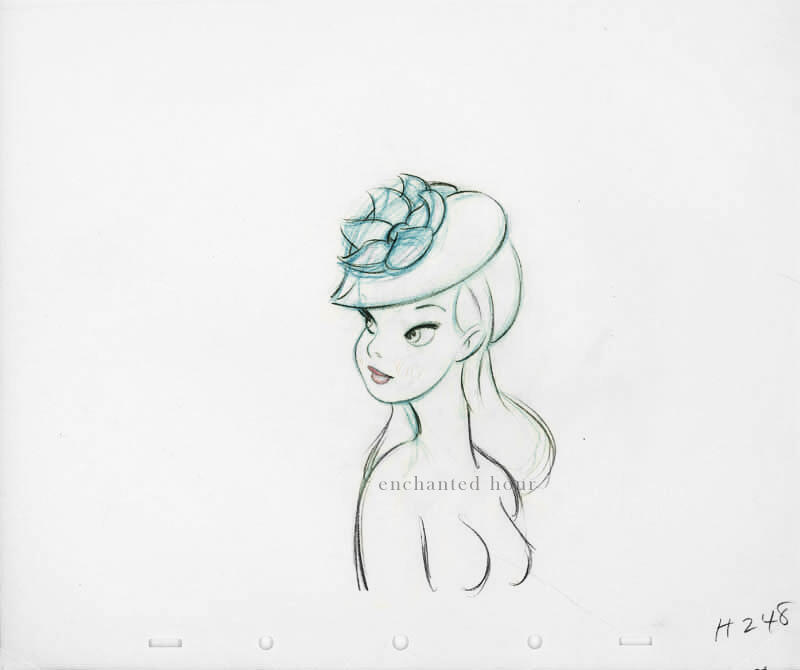
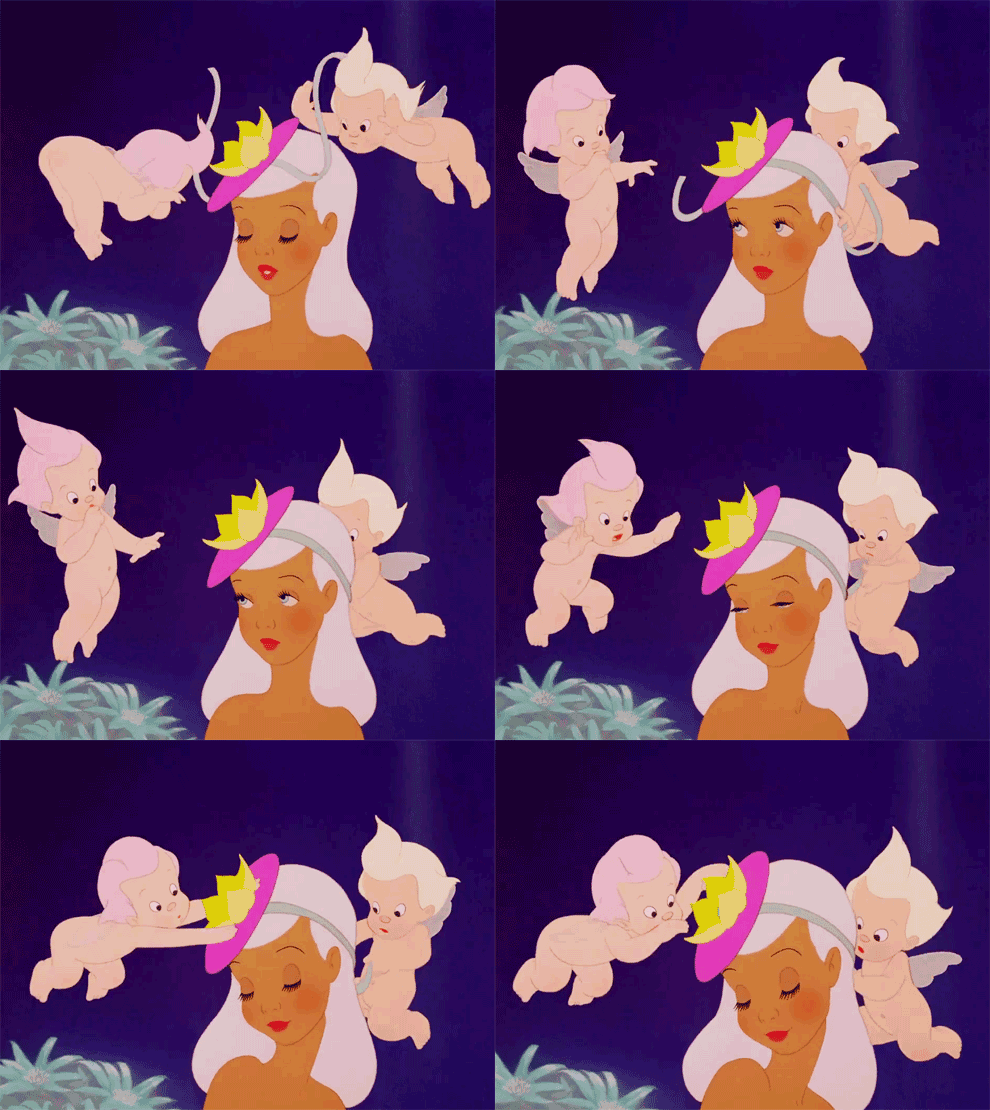
Fantasia is a masterpiece, a film that absorbed all the groundbreaking animation techniques that ever developed at the time, which include three-strip technicolor, a multiplane camera with seven levels, and a sophisticated standard of storytelling. The centaurettes are my favorite mystical creatures from The Pastoral Symphony segment, where the cherubs prepare the centaurettes to meet their equally colorful male counterparts. The idea of all the centaurettes being drawn with breasts presented a problem with the Hays Office, where they enforced the Motion Picture Production Code, which led some of the centaurettes to wear floral garlands.
Supervising Animator

Fred Moore

Animator Fred Moore was assigned as the supervising animator for the centaurettes, who was well-known for drawing beautiful women. Ollie Johnston, one of Disney’s Nine Old Men, confirmed that despite Disney wanting Fred to take on more director assignments, he was more comfortable animating than taking on a leadership role:“Supervising animators was a responsibility Fred couldn’t accept. He just kept leaving earlier and drinking more and horsing around more, and next thing you know, he got divorced. He had to be disciplined. If he’d been left animating, he might have lasted longer.”
The lot came with a pair of centaurette production drawings attributed to animator Fred Moore.
Sources: 50 Most Influential Disney Animators
© Part of the La Paisible Collective.
The Sword in the Stone
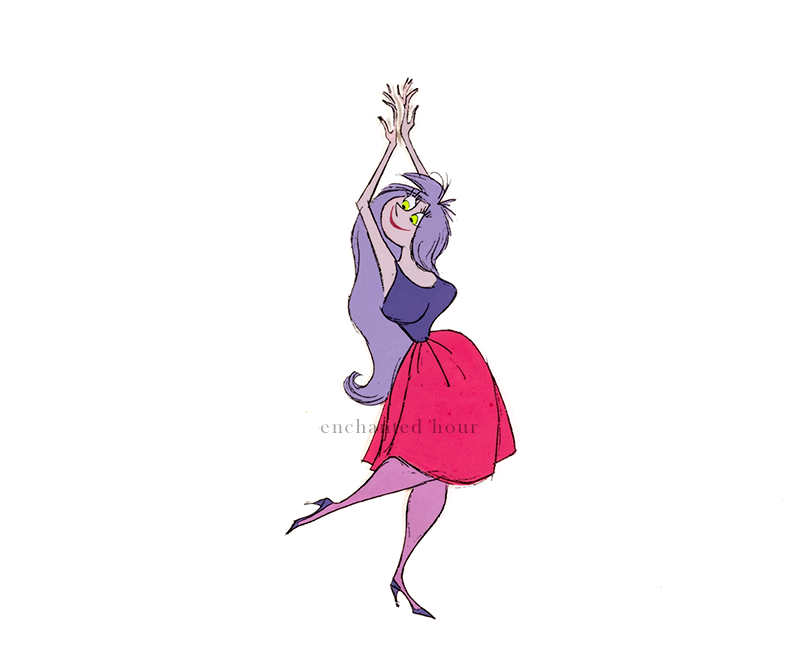
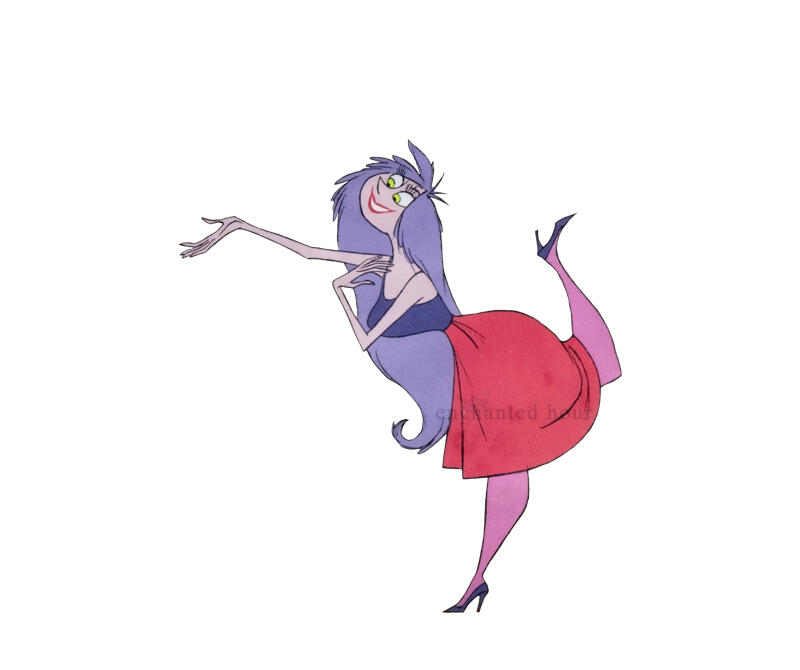
Type: Original Production Cels
Studio: Walt Disney
Year: 1963
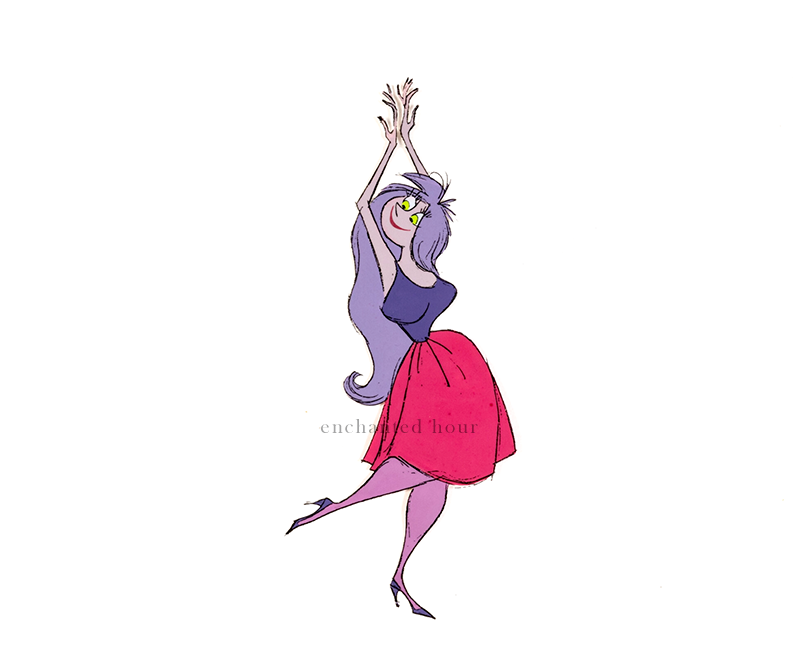
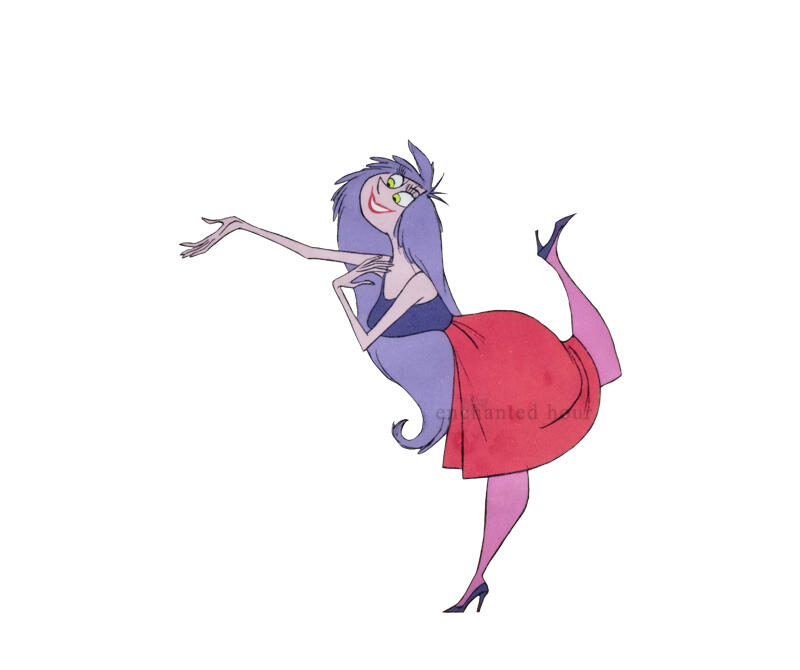
Walt Disney assigned Frank Thomas and Milt Kahl as supervising animators for Madam Mim. However, Kahl’s assistant, Floyd Norman, confirmed that Kahl completed most of the animation on Merlin and Mim. The supervising duo had a great time drawing Madam Mim, and theater audiences found her to be a delightful rival of Merlin.
Supervising Animators of Madam Mim
Frank Thomas

Milt Kahl


While Thomas oversaw a lot of scenes of Madam Mim as herself, Kahl supervised Madam Mim as a beauty. Floyd Norman recalled doing the clean-up of that sequence: “In a final bit of animated fun, the less than attractive Madame Mim transforms herself into a sexy babe."
Assistant Animator
Floyd Norman

Floyd Norman recalled doing the clean-up of that sequence: “It was no accident that the 'sexy Mim’ bore a remarkable resemblance to a tall, leggy redhead who worked upstairs in the layout department on the second floor”.

Layout artist Sylvia Roemer painting Merlin on celluloid

"Although Kahl never admitted it, it was obvious it was inspired by layout artist Sylvia Roemer. Sylvia had started in Ink and Paint and worked her way up into layout. Others recognized the resemblance immediately as well but Sylvia either didn’t notice or just never said anything."
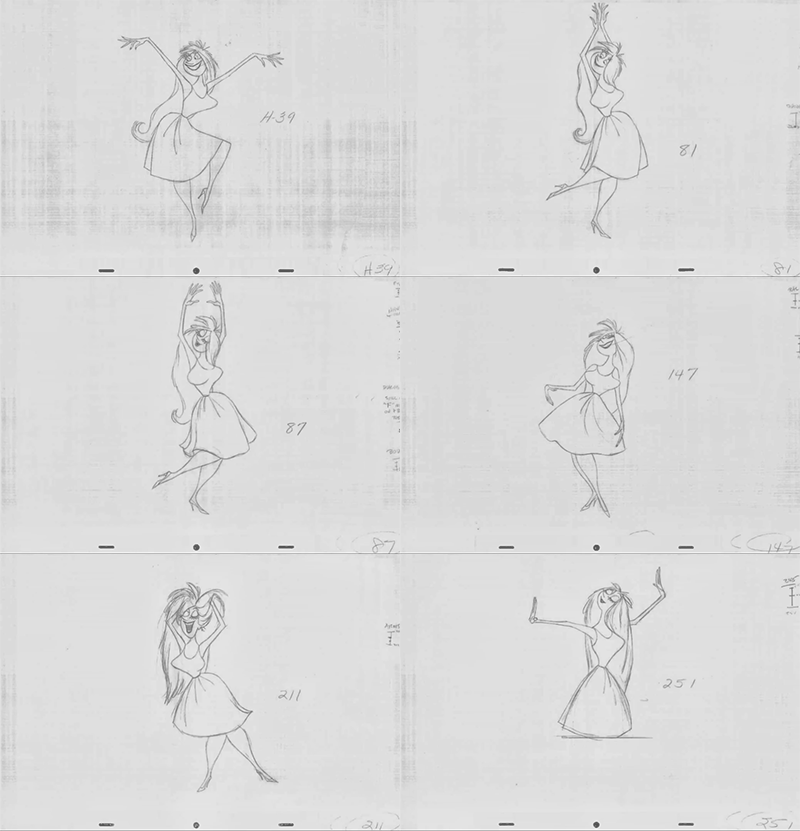
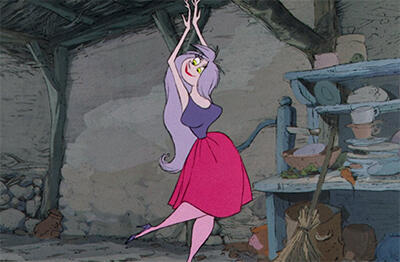
When I first saw this cel of Madam Mim in a graceful pose, I was determined to win. It went over the budget but she was absolutely worth it.
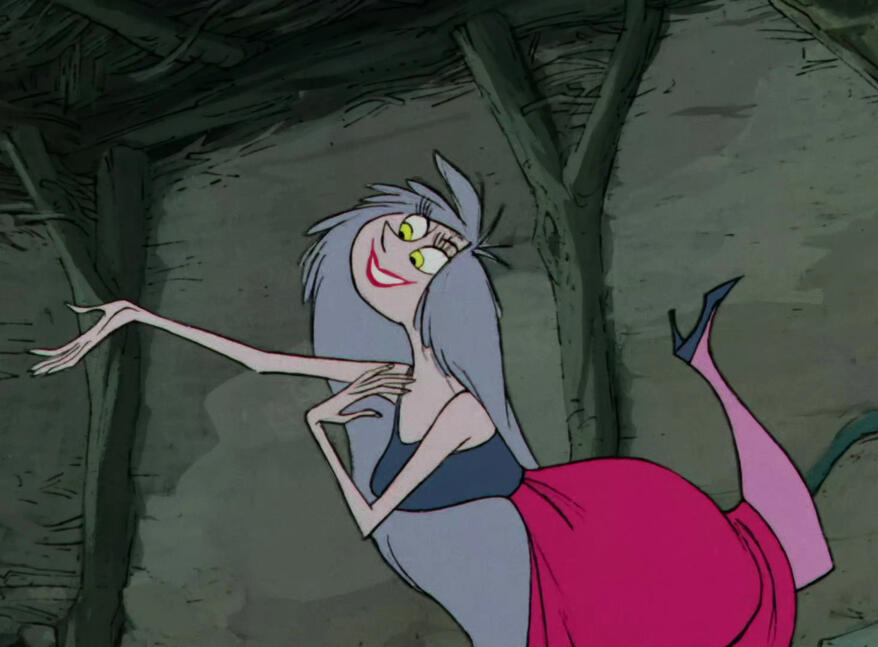
I cannot resist another grade-A Madam Mim in her beauty form, my partner stepped in and got this piece for me. I am truly stunned to have a pair of Madam Mim cels in this form. Here is a collector who also owns beauty Mim!
Sources: Cartoon Research, Feeling Animated, 50 Most Influential Disney Animators, YouTube
© Part of the La Paisible Collective.
Sleeping Beauty
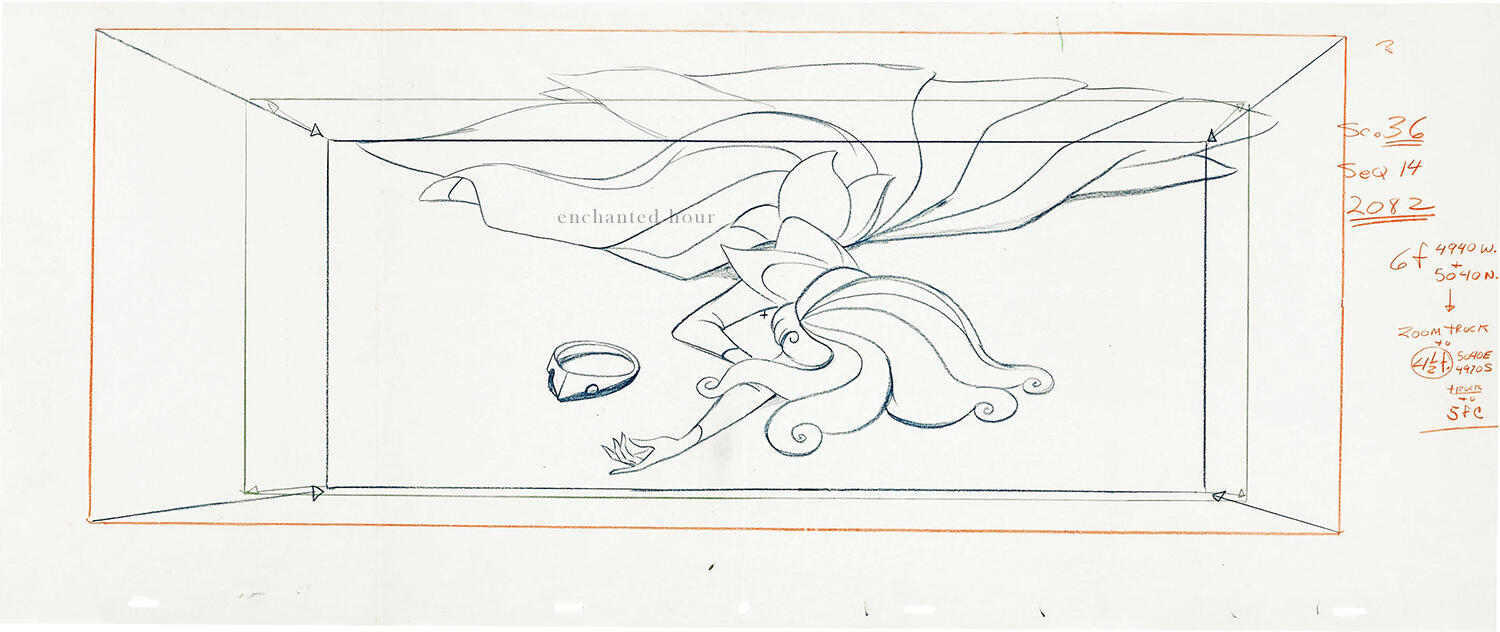
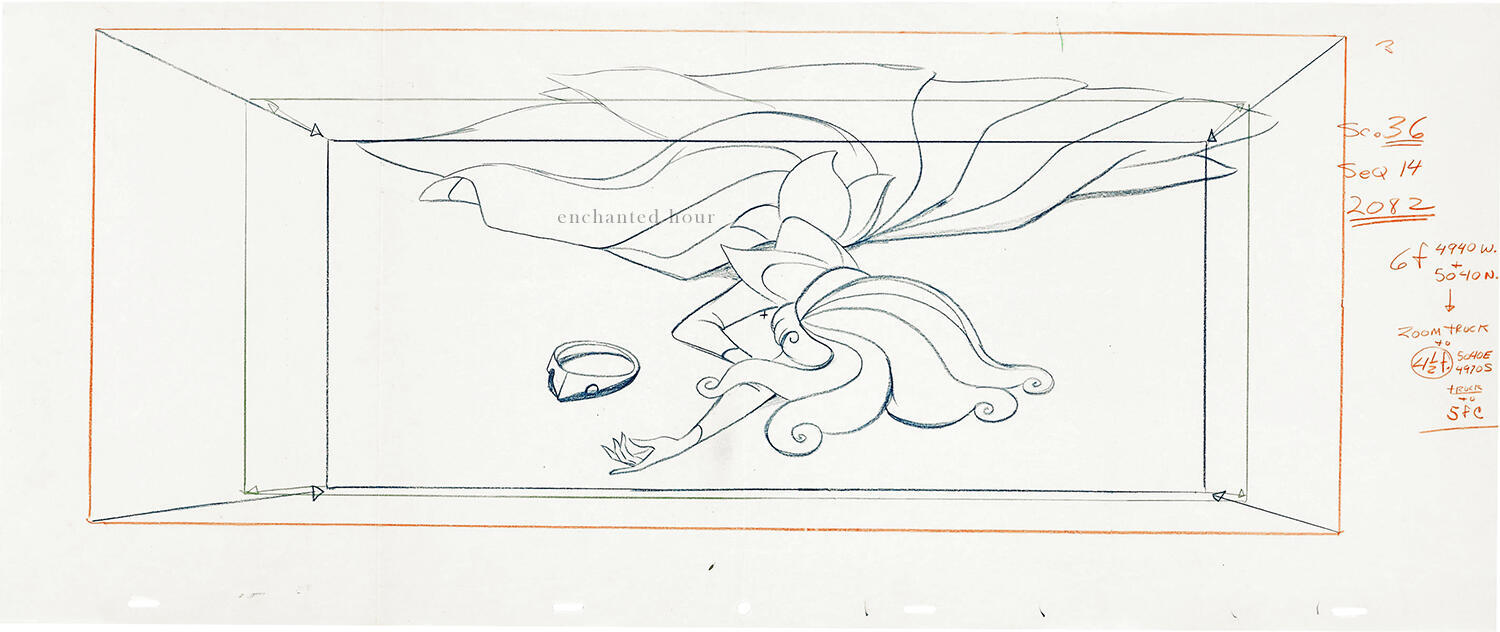
Type: Original Production Layout
Studio: Walt Disney
Year: 1959
Sleeping Beauty is vastly different from its earlier princess predecessors; the style was medieval gothic, and the slapstick was toned down to match the classical tones. There was an unsettling eeriness when Maleficent lured Aurora to the high tower for her doom, all while her fairy guardians warned her not to touch anything.
Layout Artist

McLaren Stewart with Walt Disney

This is an original production layout drawing by McLaren Stewart. He used blue, green, and red pencils on this animation sheet measuring 12.5” by 30.” He was assigned to scene 36 of sequence 14. There were written instructions on the corner of the layout detailing how the camera would zoom in and then back for the dramatic effect.
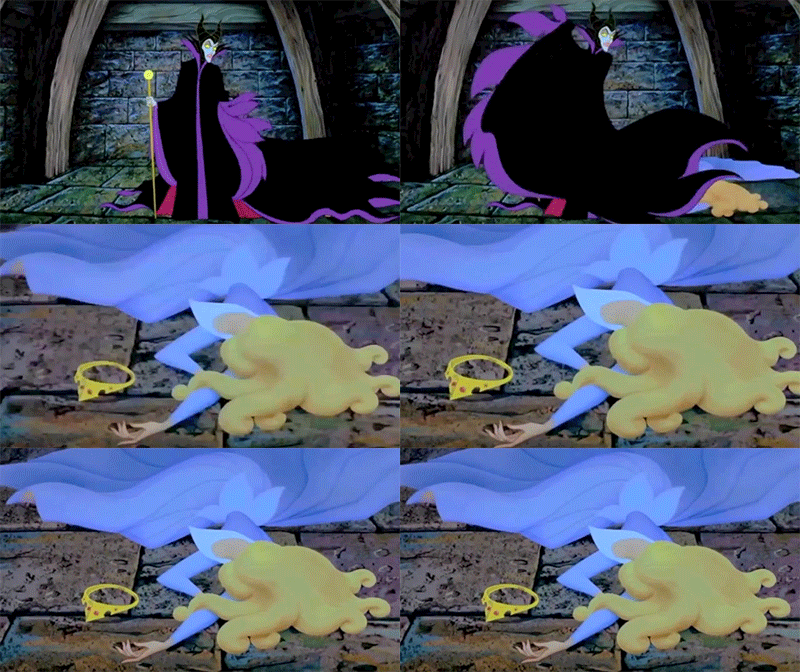
McLaren Stewart was an art director for Snow White and the Seven Dwarfs, Pinocchio, Fantasia’s Right of Spring segment, Bambi, and Mary Poppin’s animation sequence. His incredible skill as a layout artist was credited in Cinderella, Alice in Wonderland, Peter Pan, Lady and the Tramp, and showcased here, Sleeping Beauty.
One of my dream pieces is the original cel of this exact scene, and most likely it would be out of my budget. But when this original layout is up for sale, I know I will be more happy with this than with what I originally wanted. The draft and the blue print of this haunting scene. Sleeping Beauty is one of my all-time favorite Disney films. What a vision Walt and the team had—so underappreciated at that time.
Sources: IMDB
© Part of the La Paisible Collective.
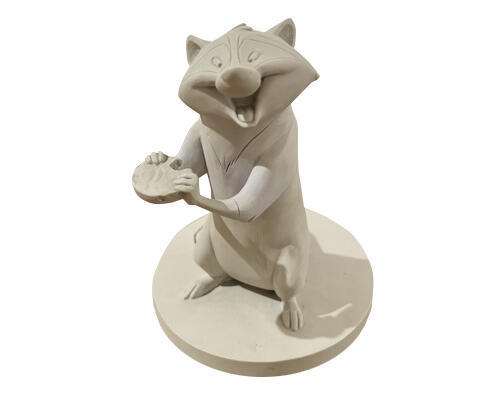
Pocahontas
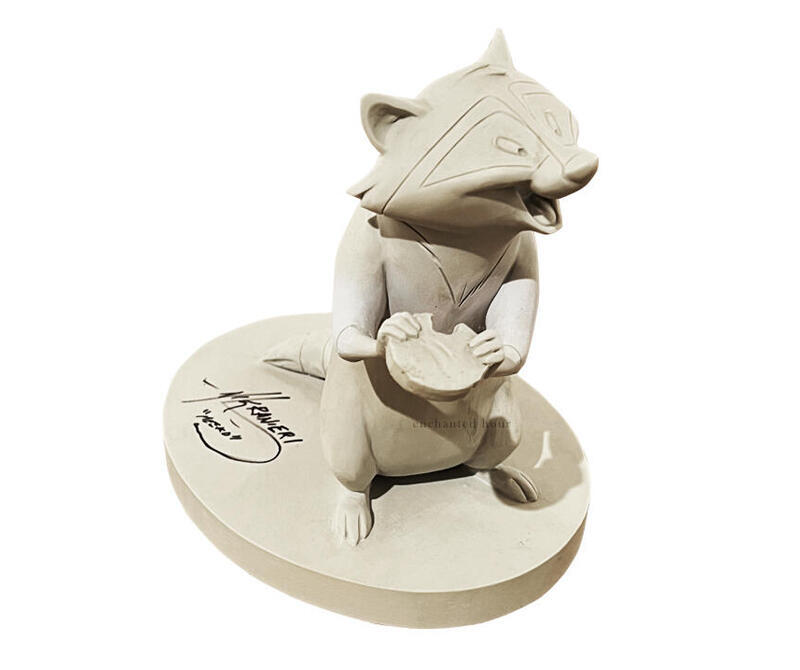
Type: Original Maquette
Studio: Walt Disney
Year: 1995
Provenance: Originally owned by David T. Nethery, animator assistant.
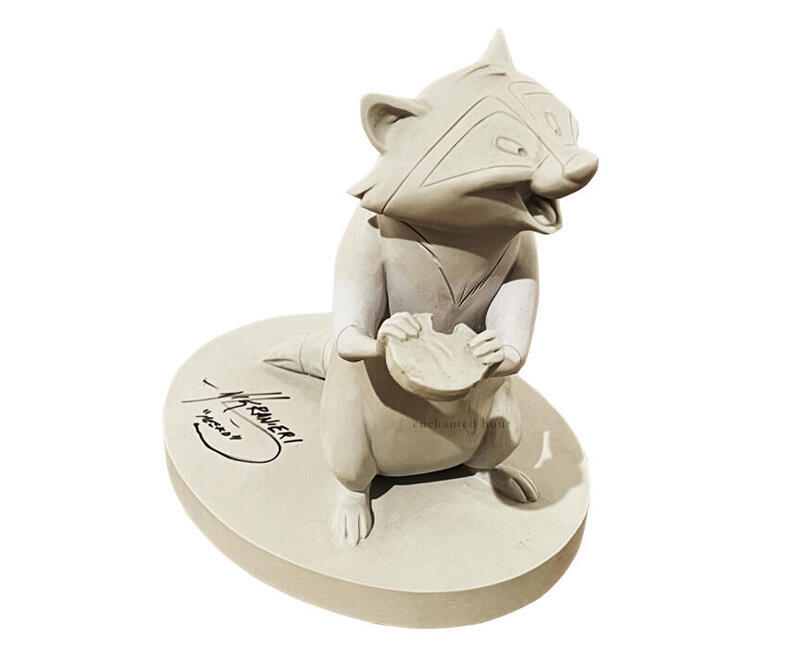
After the roaring success of Beauty and the Beast, the Pocahontas project was pushed to recreate its predecessor’s record-breaking glory. Some of the animators transferred from The Lion King, believing it would be the second coming of Beauty and the Beast. Though it didn’t share the same reception, it was still a box office success, and “Colors of the Wind” scored the highest musical prize from the Academy Awards, Golden Globe, and Grammy Awards.
Character Sculptor

Kent Melton

Kent Melton is a legendary sculpture artist; his credits include Hanna Barbera, Walt Disney, Don Bluth, DreamWorks, and LAIKA. His humble beginnings are not only interesting but also awe-inspiring. Melton was frustrated by the lack of toys in his favorite Saturday morning cartoons; for fun and amusement, he sculpted them. He brought his creations with him to a Beatles music convention in Chicago. A Disney employee, Don Dougherty, saw them and advised, “If you can sculpt cartoons like that, you can make money in Los Angeles.” Kent took it seriously, left his job, and moved his family to Los Angeles. When he arrived, Don did not respond to his calls. The moving company contract was about to expire, and Kent and his family were about to return home until a renter begged for someone to take the house. The Meltons ended up staying.
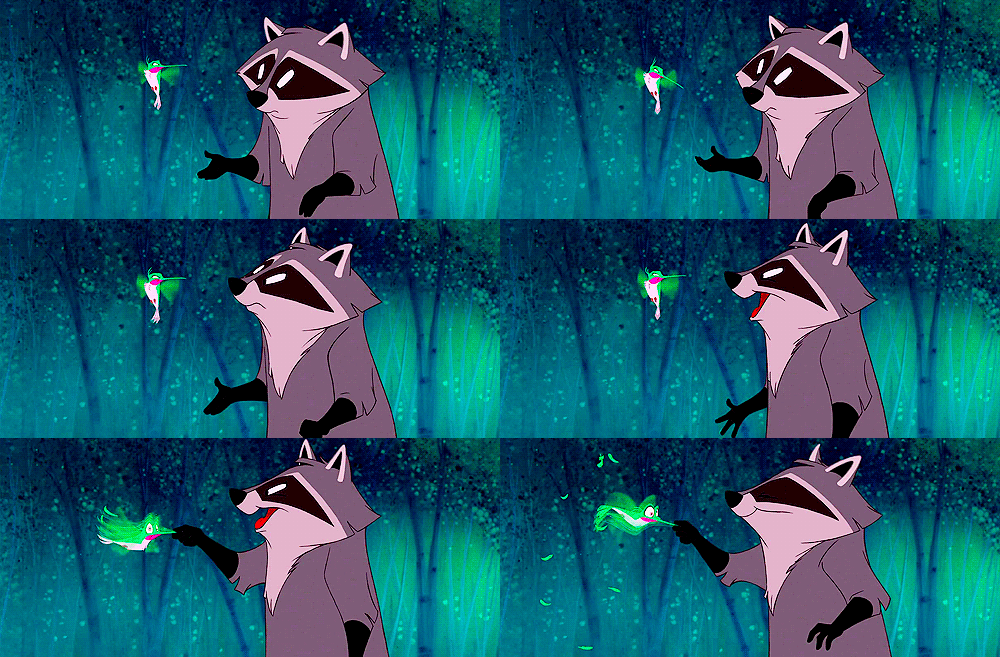
Don and Kent reconnected, but he had already left Disney and started working for Hanna-Barbera. Feeling guilty, Don introduced Kent to Joe Barbera, who looked through his portfolio and said, “We have a lot of guys who can draw, but we’ve never had a sculptor.” Don was hired and started working on The Flintstones and The Jetsons. Years later, Disney hired him to work on Aladdin, The Lion King, Pocahontas, and more.
Supervising Animator of Meeko

Nik Ranieri

The supervisor animator for Meeko is Nik Ranieri. In an episode of The Tiara Talk Show, he mentioned how daunting it was to be in charge of Meeko and how he was “scared to death” to create a character without a guide or dialogue. He admired animator Duncan Marjoribanks, who is the supervisor animator for Aladdin’s Abu:“I saw it as impossible. So, when I got Meeko, I thought, how am I going to handle this character? It’s pantomime, and it made me grow as an animator to actually take on that challenge.”
Animator Assistant

David T. Nethery

Nik Ranieri had a team he supervised in the creation of Meeko; each assistant animator had a character model sculpted by Kent Melton. One of his assistant animators is David T. Nethery, whose credits include Who Framed Roger Rabbit, The Little Mermaid, Aladdin, The Lion King, and, alas, Pocahontas. He used this very maquette as a tool throughout the film; when the producer allowed the animators to take home their character maquettes, Nethery had his supervisor, Nik Ranieri, sign his. I am honored to be a caretaker of this incredible treasure that Nethery has held on to since the film's production.
Sources: 417Mag, IMDB, YouTube
© Part of the La Paisible Collective.
Pocahontas
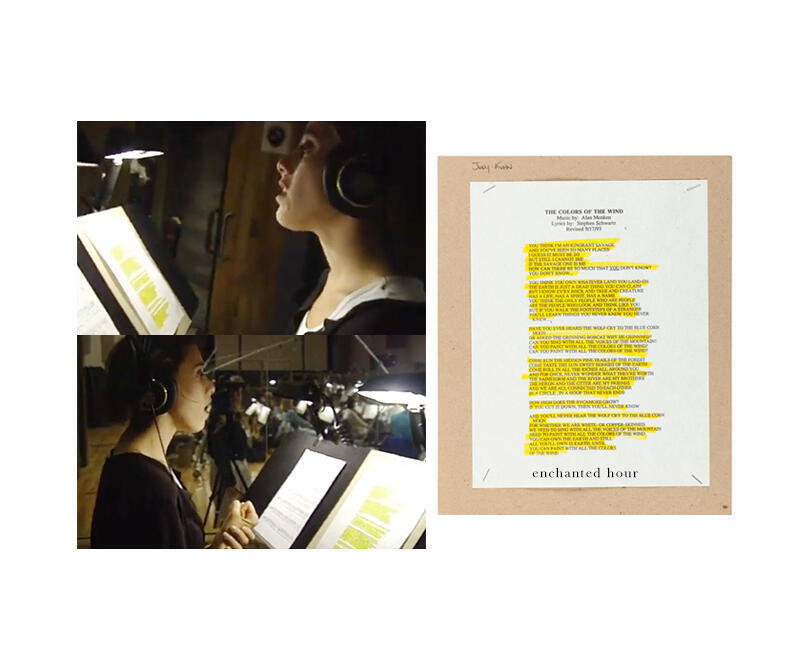
Type: Original Music Sheet
Studio: Walt Disney
Year: 1995
Provenance: Originally owned by Mike Gabriel, film director of Pocahontas.
♪ And you'll never hear the wolf cry to the blue corn moon
For whether we are white or copper-skinned
We need to sing with all the voices of the mountain
Need to paint with all the colours of the wind ♪♪ You can own the earth and still
All you'll own is earth until
You can paint with all the colours of the wind ♪
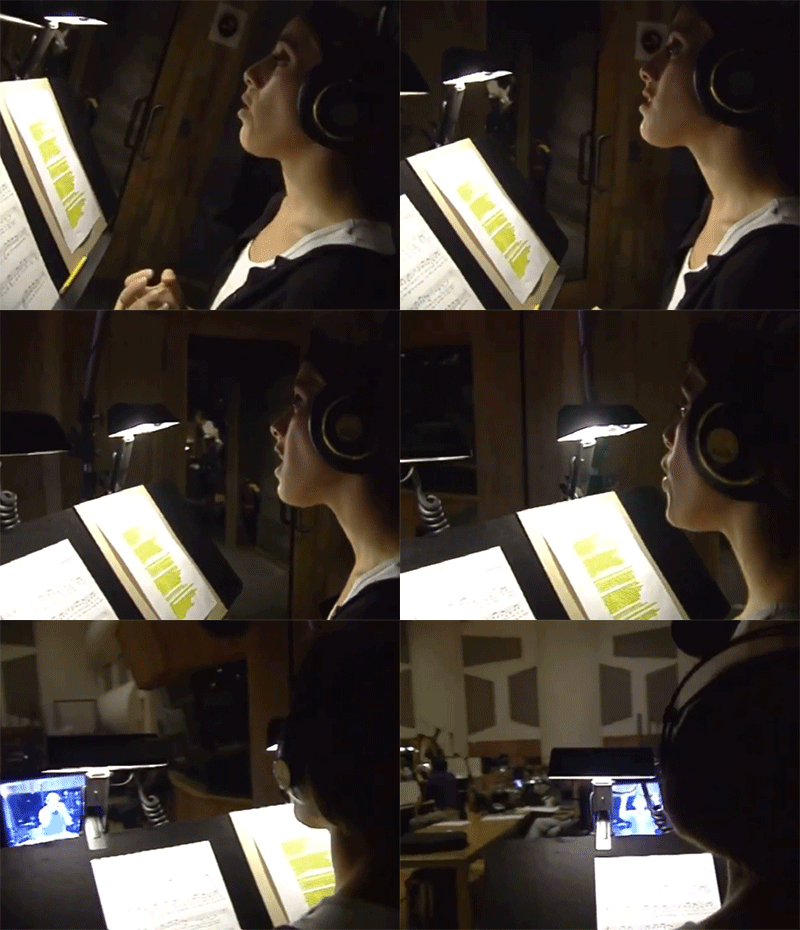
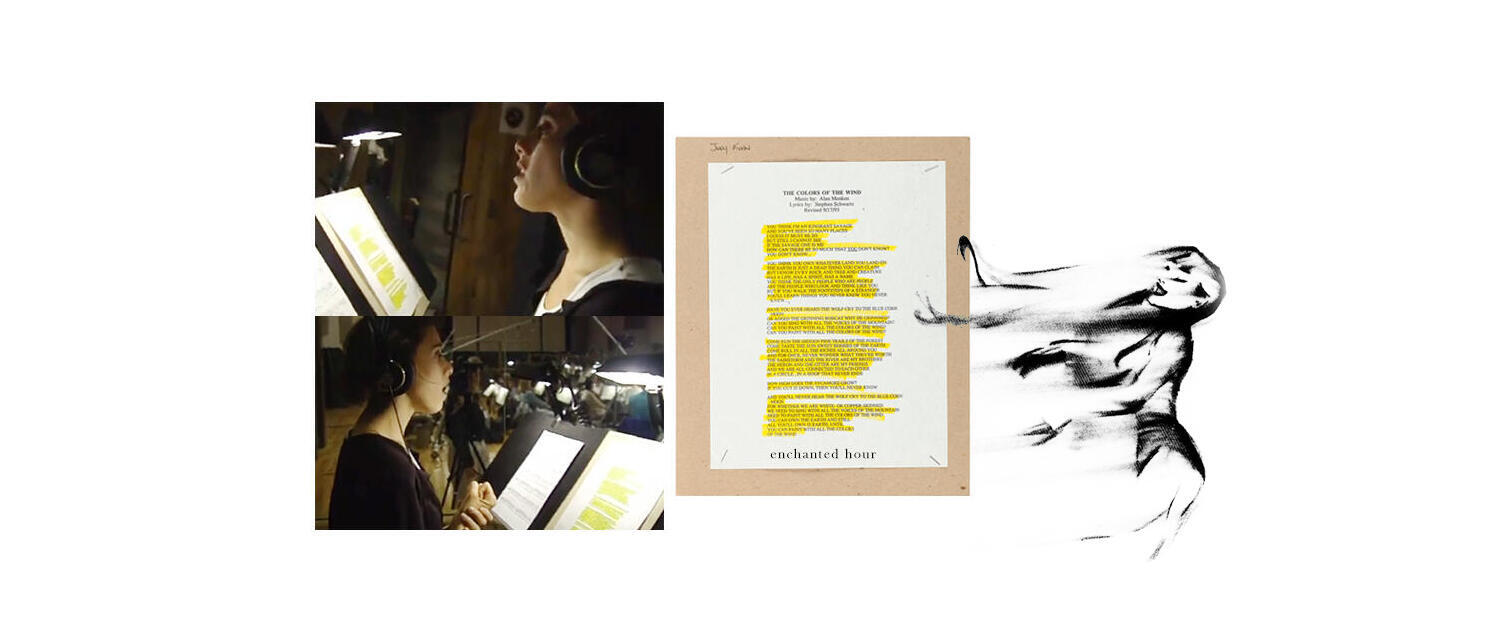
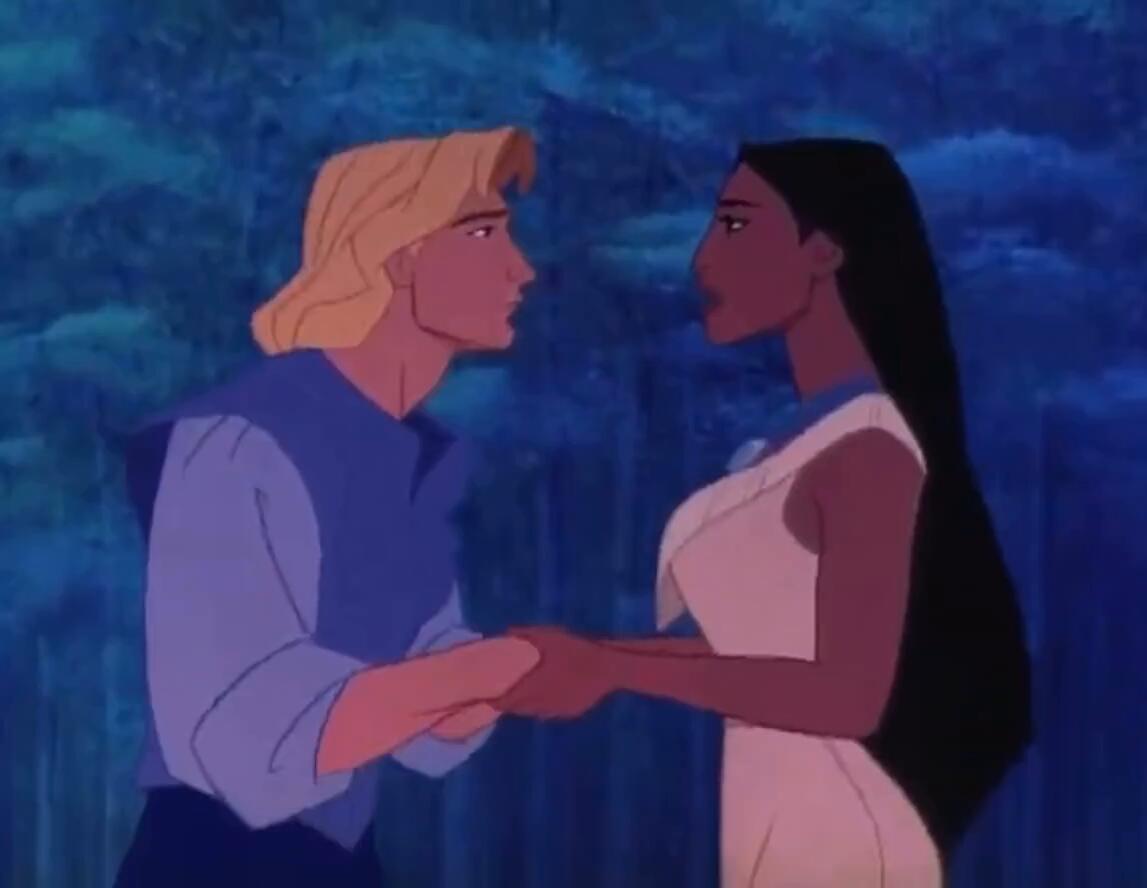
“Colors of the Wind” is a pop ballad by composer Alan Menken and lyricist Stephen Schwartz for Walt Disney’s animated feature film, Pocahontas. Judy Kuhn is the singing voice of the title character; she was trained as an “operatic soprano” at the Oberlin Conservatory of Music. It was critically acclaimed by critics and the audience alike, and the song peaked at number 4 on the US Billboard Hot 100.
Composer & Lyricist

Alan Menken

Stephen Schwartz


The list of accolades this song received are:
Academy Awards – Best Original Musical or Comedy Score
Academy Awards – Best Original Song
Annie Awards – Best Achievement in Music
Golden Globe Awards – Best Original Song – Motion Picture
Grammy Awards – Best Song Written Specifically for a Motion Picture or for Television
This is the very lyric sheet used during the recording of “Colors of the Wind,” sung by Judy Kuhn. The lyrics are highlighted in yellow and stapled to the board, with the singer’s name written on the left corner. The time, date, and other miscellaneous notes were written on the back:
• Judy Kuhn’s Lyric Sheet
• Tuesday Sept 21, 1993
• 10 – 1pm
• Todd-AO Scoring Stage
• Final Version
The film’s director, Mike Gabriel, held on to this used lyric sheet for nearly twenty years. He decided to let go of some of his collection, and now it's part of the Enchanted Hour collection. I really have to pinch myself because "Colors of the Wind" is my all-time favorite Disney song, I get goosebumps every time I hear Judy Kuhn sing the final chorus line: "And you'll never hear the wolf cry to the blue corn moon"
Sources: Wikipedia
© Part of the La Paisible Collective.
Coraline
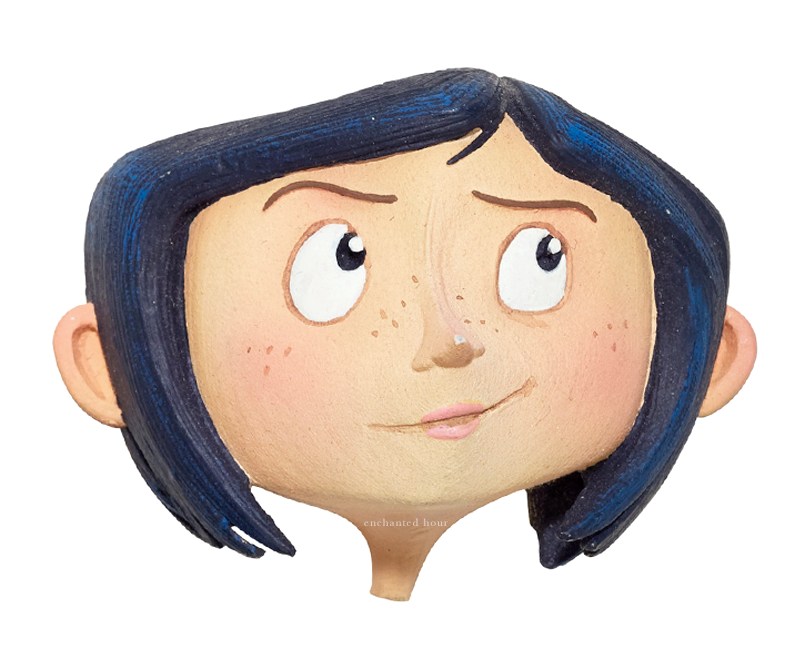
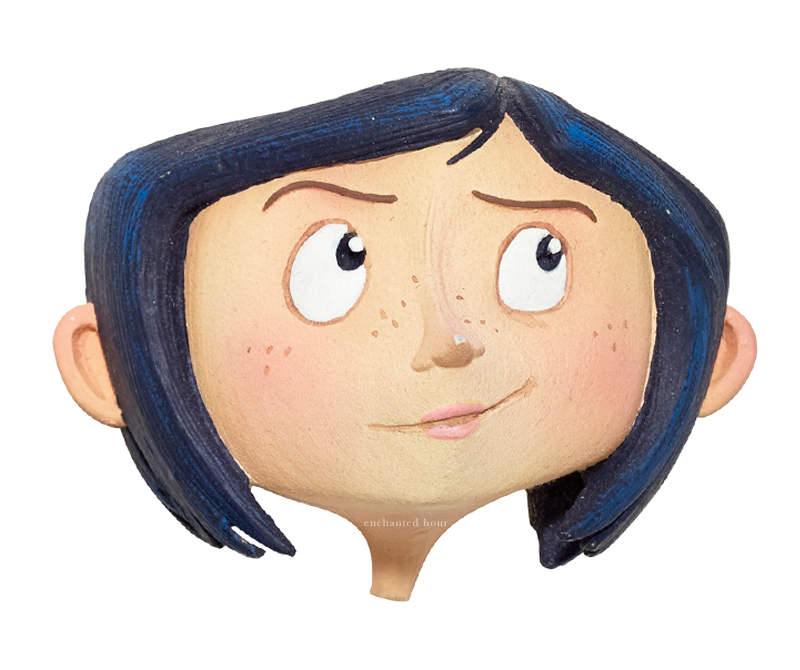
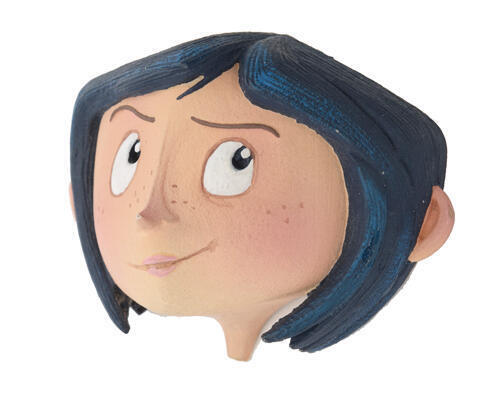
Type: Original Maquette for Paint Test
Studio: Laika Studios
Year: 2009
Provenance: LAIKA.
Coraline is the first film by LAIKA, an American stop-motion animation studio directed by Henry Selick. The film is based on an original children’s novella by Neil Gaiman, a fantasy horror tale of a young girl named Coraline Jones. After moving into a pink house that was converted into apartments, she discovers a little door that leads to a duplicated version of her home, except everyone has buttons for eyes.
Character Sculptor
Kent Melton

Marc Davis, one of Disney’s Nine Old Men, would sculpt Snow White out of clay to see all the perspectives and angles of the character. Since then, Walt Disney has produced several sculptures of each character to give to animators to study. Animators know that these must be returned by the end of the production; some stayed as decorations, and others would disappear near the end of the film. LAIKA hired Kent Melton as a sculpture artist for Coraline. He uses a material called polymer clay. “You can bake at a low temperature to protect it after it’s finished,” Kent explained. His legendary work includes Aladdin, The Lion King, Pocahontas, The Hunchback of Notre Dame, Hercules, Mulan, The Prince of Egypt, Tarzan, and The Incredibles.

One of the many color test maquettes from LAIKA archives.

A maquette cast from the original sculpture of Coraline’s head that was used early on in production to test the colors and development of the character. It would be a dream to own a screen-used Coraline puppet, but I am happy to add this to my collection.
© Part of the La Paisible Collective.
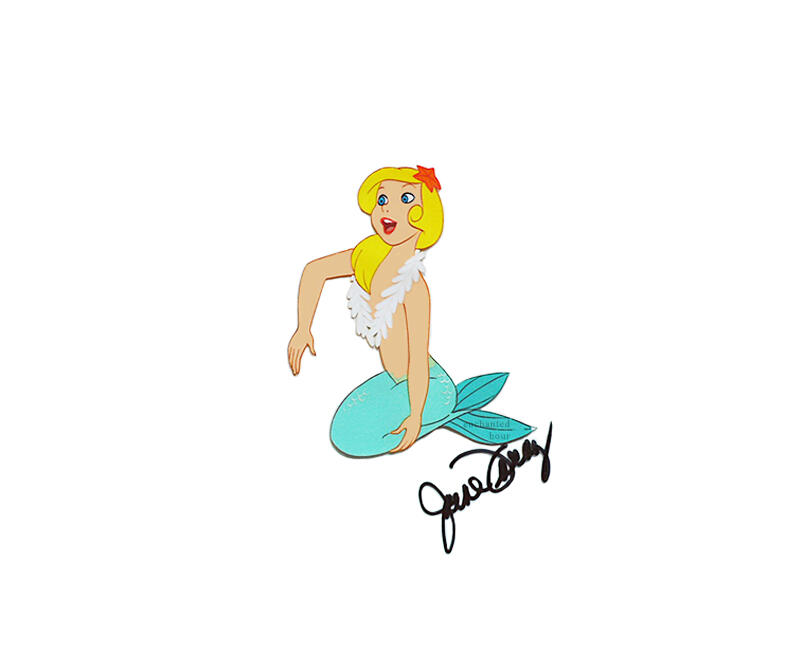
Peter Pan
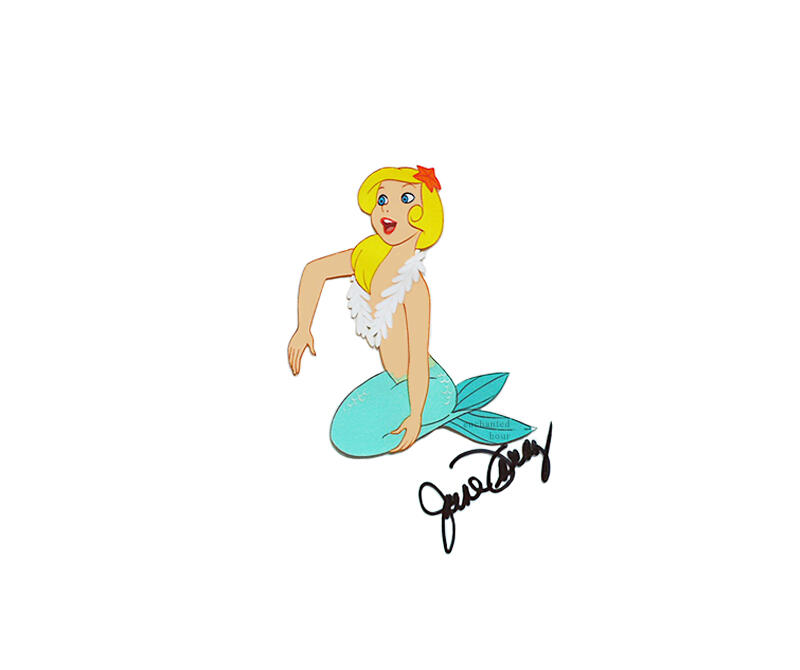
Type: Original Production Cel
Studio: Walt Disney
Year: 1953Signed by June Foray
When Wendy wonders about her happy place, “I’ll think of a mermaid lagoon… underneath a magic moon.” Full of childish excitement, she did not expect such an aggressive encounter with such enchanting creatures. Like Wendy, I, too, find them alluring, a testament to the exceptional talent of animator Fred Moore.
Supervising Animator
Fred Moore

Fred Moore was assigned to do character animation of the mermaids; he was infamous for his range in drawing women. They can be adorable with rosy cheeks, demure in the latest fashion, and ultra-sensual, which can even rival Tex Avery’s Red Hot Riding Hood. He was not just great; he was the best at it—a prime example would be his work on Fantasia’s centaurettes, arguably one of the highlights of the film.
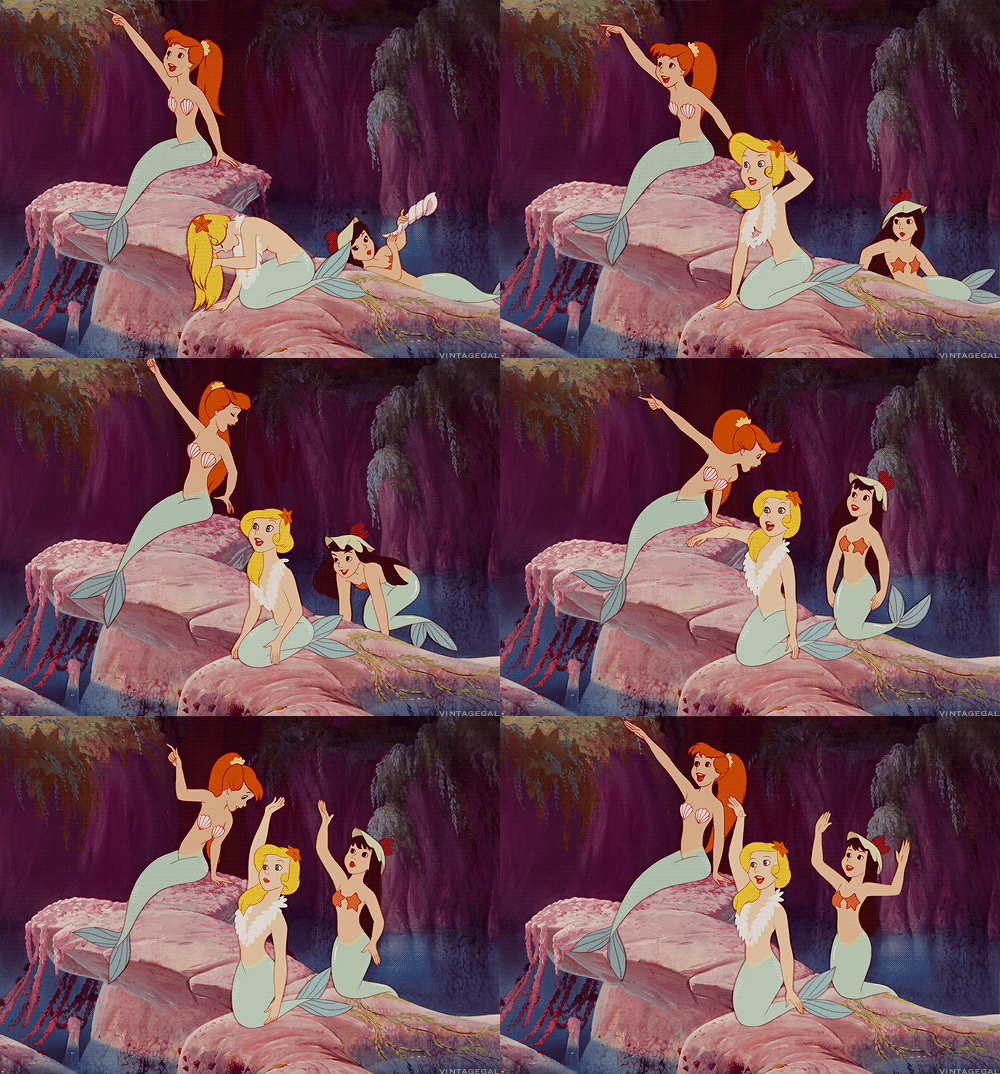
“Oh! Hello Peter!” is the first line from this blonde mermaid decorated with a starfish on her head and a floral necklace covering her cleavage. What is also noticeable on this production cel that it was signed by voice actress June Foray, who was also one of the models for the mermaids.

Margaret Kerry with the harp, Connie Hilton and June Foray with a shell horn.

Margaret Kerry, who was more known for her work as Tinker Bell's model, recalled the assignment vividly:"The three of us, Connie Hilton, June Foray and me showed up at Disney’s Sound Department about two weeks before the filming. We recorded the track and went home."

Ronald Dupree as Peter; June Foray, Connie Hilton & Margaret Kerry as the mermaids

“A couple of weeks later, the ‘set’ was ready and we dressed in our one-piece bathing suit (with cover-ups) and promptly climbed up on the prop rock. Our ankles were bound by some sort of soft tubing as I remember."

Top: Margaret Kerry, Middle: June Foray, Bottom: Connie Hilton.

“The dialogue track was played for us and we ‘mouthed’ our lines from the track. We did not sing and received good-hearted applause from the crew when we got it right. People were coming and going watching the scenes we were doing."

June Foray

There was once a walk-in animation art gallery in New Jersey, owned by Disney-loving couple. When I inquired about the mermaid cel, they revealed to me that the piece was custom matted and signed by voice artist June Foray.“We actually met June at her home, and she signed a few things for us years back. If memory serves me correctly, she said it was her first job with Disney!”

I had never seen an original cel signed by the mermaid models; to come across this rarity was a chance of a lifetime. While doing research on this piece, I am more delighted to learn of June Foray's acting credits; Cindy Lou Who in the 1966 classic How the Grinch Stole Christmas, Lucifer in Disney's Cinderella, Rocky the Flying Squirrel, Lena Hyena in Who Framed Roger Rabbit, Queen Tabitha in Don Bluth's Thumbelina, Grandmother Fa in Disney's Mulan, and so much more. I have been hearing her voice throughout my entire childhood!
Sources: Cartoon Research, Deja View
© Part of the La Paisible Collective.
Wynken, Blynken & Nod
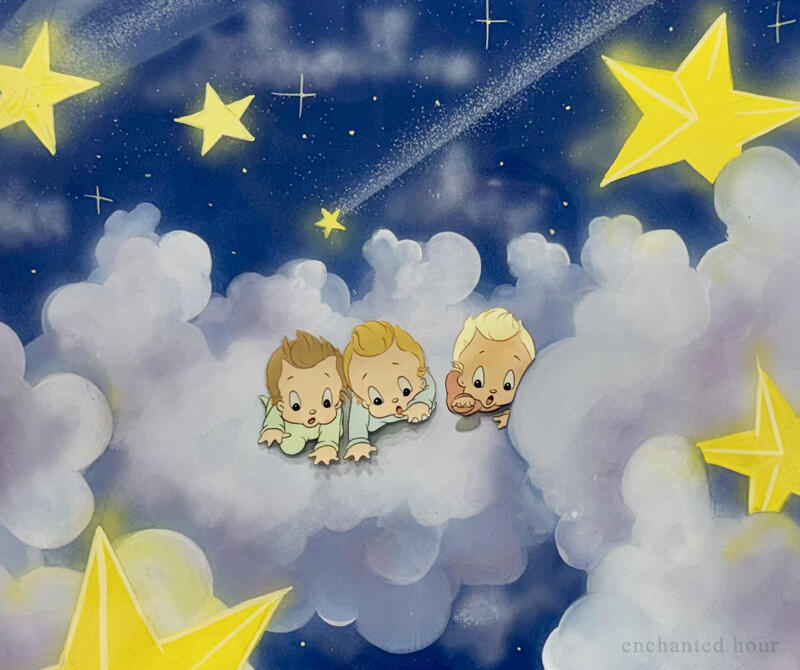
Type: Original Production Cel
Studio: Walt Disney
Year: 1938
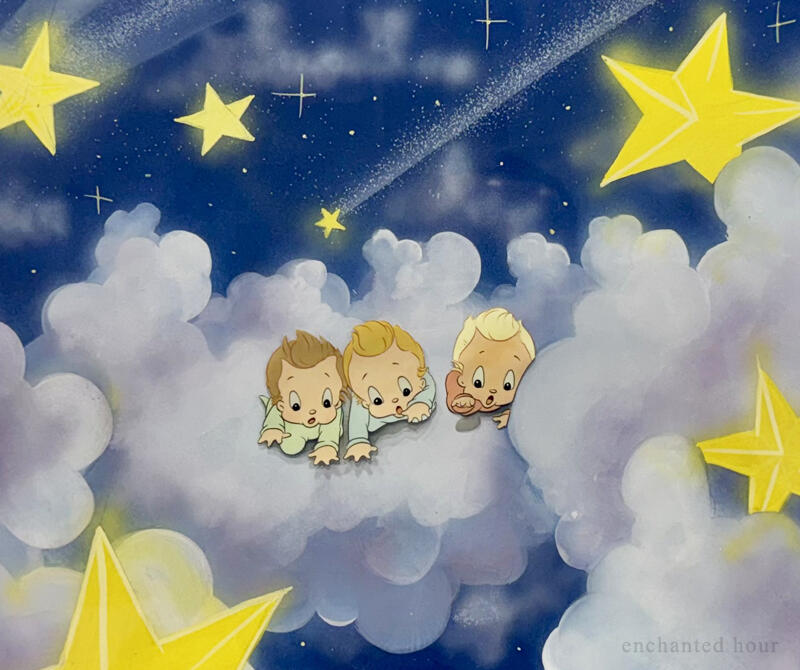
There are many Silly Symphony shorts that center around babies wandering through dreamy corridors, either in land or waterscapes. Wynken, Blynken & Nod is a gem of the Symphony catalog, one of the very few vintage films that has been on Disney Plus since the dawn of its debut; some shorts come and go, but this remains a mainstay staple.

Eugene Field

The short film was conceptualized from a children’s poem by American poet Eugene Field, published on March 9th, 1889. Originally titled “Dutch Lullaby," it is about three children sailing in a wooden shoe at night with the intention of fishing little stars to bring back home.

Multiplane Camera

What makes this film distinctive is the use of the multiplane camera, where the setup consists of layers of artwork painted on glass, creating an added dimension on the frame where the camera can focus and zoom in and out.
This whimsy masterpiece has always been one of my very favorites, I had opportunities to purchase a cel but it’s usually just one character when I dreamed of having all three. I am thrilled to finally have it in my collection – with a custom background to boot!

Sources: Wikipedia, No Film School
© Part of the La Paisible Collective.
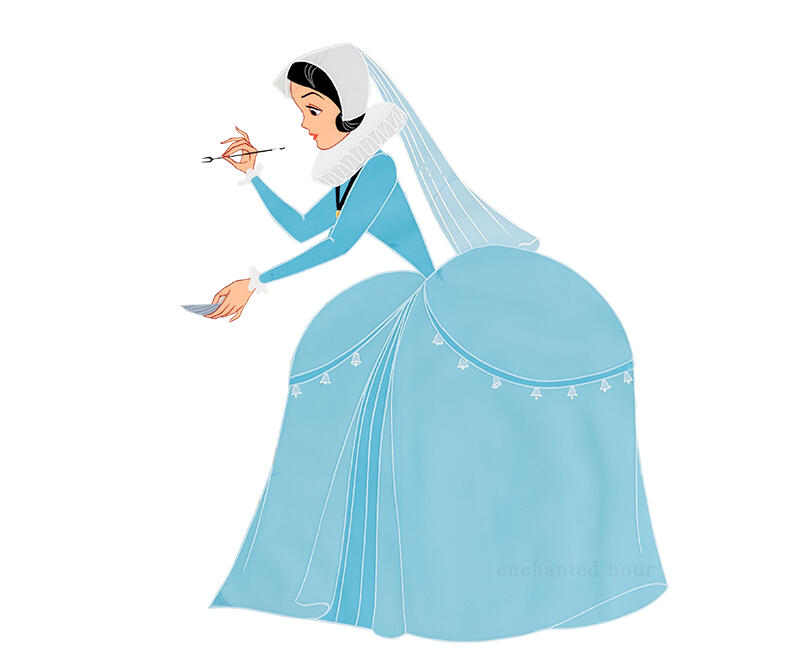
The Truth About Mother Goose
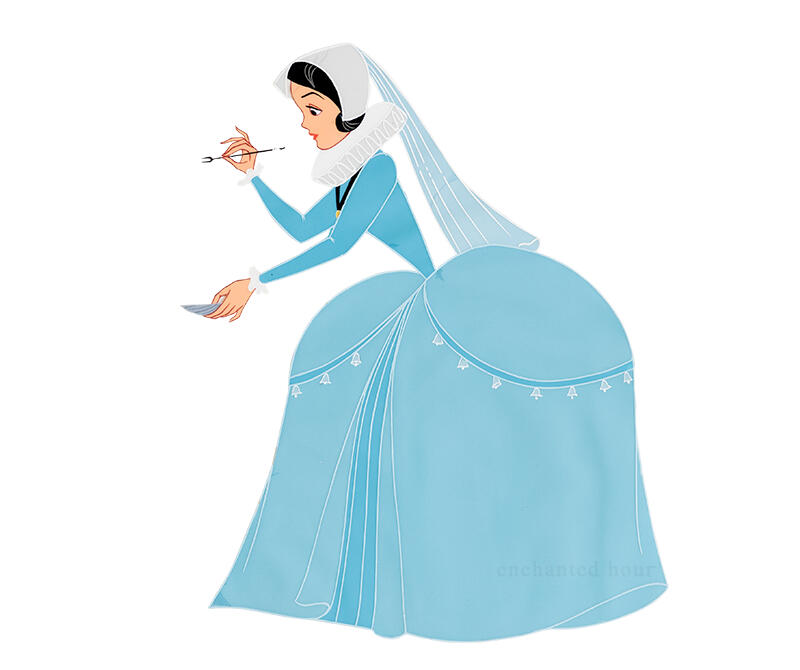
Type: Original Production Cel
Studio: Walt Disney
Year: 1957
The Truth About Mother Goose is an animated short directed by Wolfgang Reitherman and Bill Justice, and it was released as a double feature with Perri on August 28th, 1957. There are three nursery rhymes based on historical events, including Little Jack Horner, Mary, Mary Quite Contrary, and London Bridge. I fell in love with Mary's character design based on the actual Queen of Scotland.

Mary is depicted as a whimsical ruler, adorned with silver bells on her dresses, with a fondness for expensive seafood, and attended by youthful and pretty ladies-in-waiting, embodying extravagance at her fingertips. She had lost battles and eventually lovers, though warned about her cousin, who saw her as a threat to the throne; Mary just went about her merry ways, which eventually led to her doom.
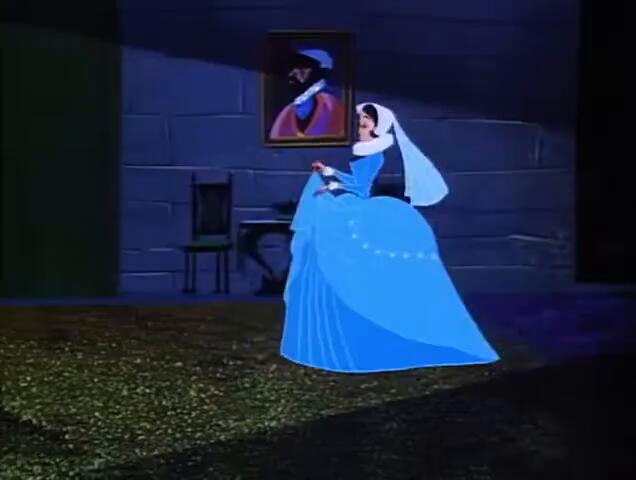
I wish the short film could have been a full movie, because the designs and lush colors are right up in my alley. Oh, how pretty Mary is! I’ve always desired cels of her for so long, but I saw her with a “cockle shell” and knew I had to have it. Hopefully, there will be more pieces of her in my collection.
Sources: Disney Fandom Wiki, Wikipedia
© Part of the La Paisible Collective.
Coraline
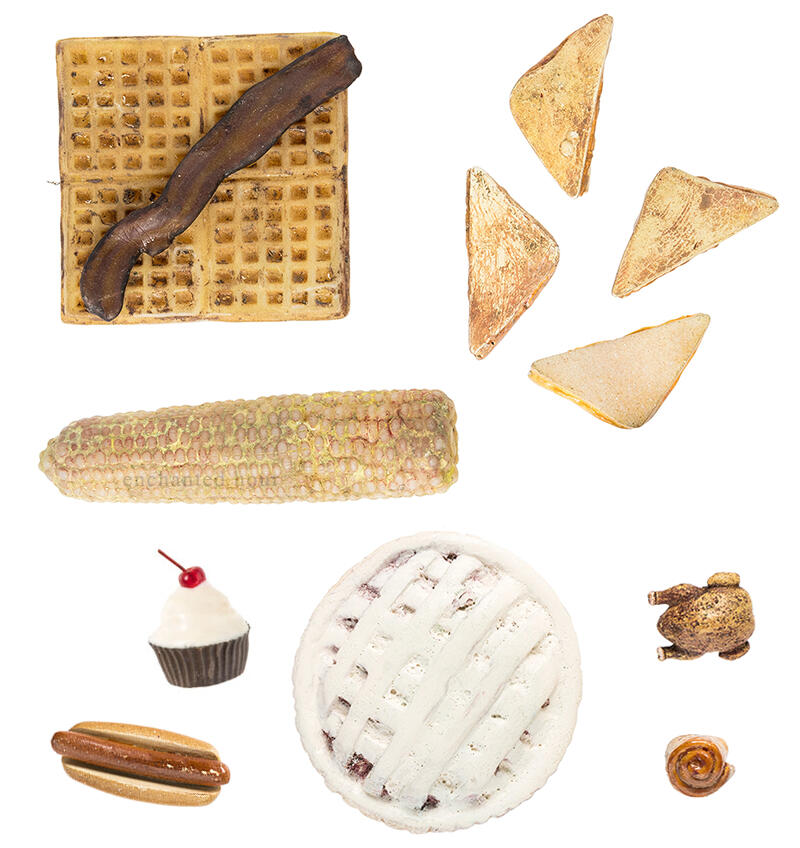
Type: Original Film Props, Resin
Studio: LAIKA
Year: 2009
Coraline is a stop-motion animated film directed by Henry Selick, a story of a blue-haired girl who moved into a new home and found almost the exact copy of her environment through a tiny door, except everyone had buttons for eyes. Coraline feels like a gothic children’s novel with a modern fairytale twist, and it is translated beautifully by Selick’s vision.

Concept art by Tadahiro Uesugi.

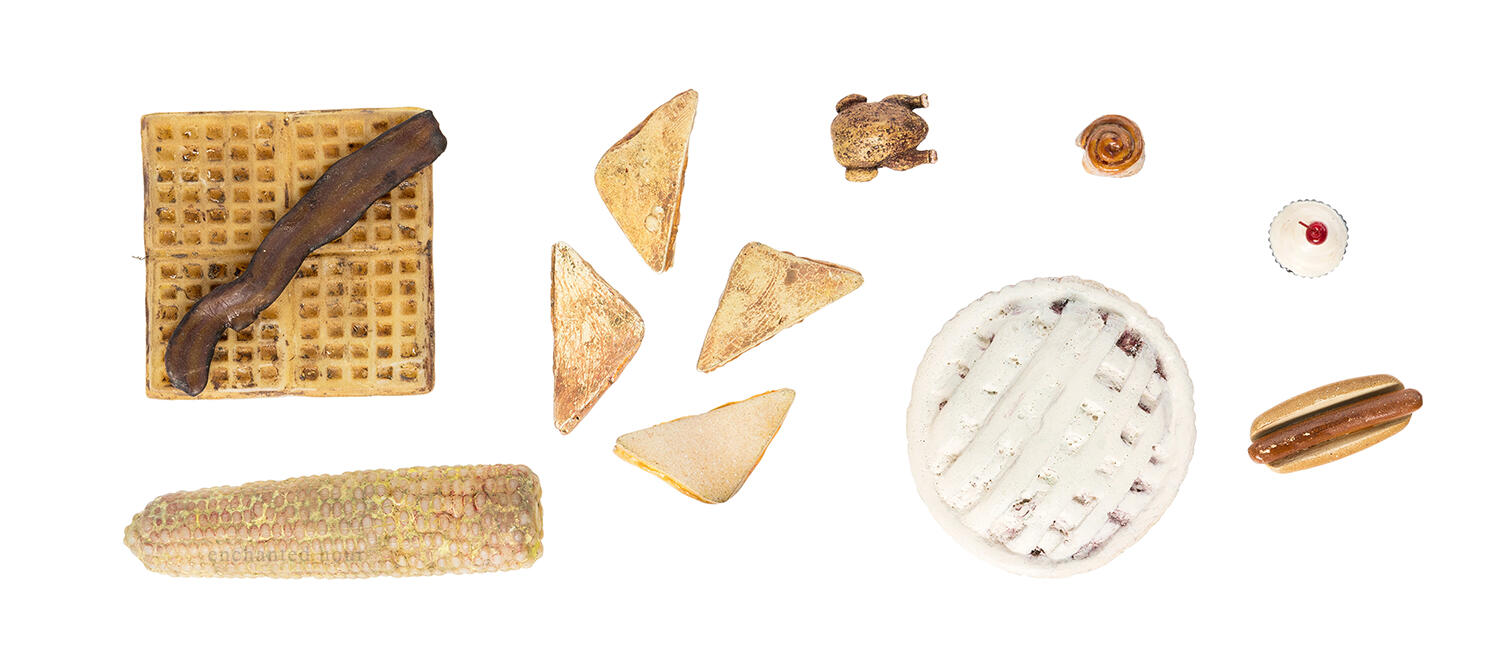
I love watching food being prepared in animated films, especially scenes from Studio Ghibli’s From Up On Poppy Hill. However, food is a crucial element that distinguishes Coraline’s parents and her ‘other parents'. Her father creates a mixture of glob while her ‘other mother’ prepares chicken, mashed potatoes, corn on a cob, cupcakes, pizza, and hot dogs – almost every child’s must-have food palate.
The original character puppets are way out of my budget; I was able to acquire a paint test maquette. I am appreciative to have this little treasure, but I long for something else (I want moooorreee, a la Ariel). Out of the blue, there was an auction lot that consisted of twelve food props used on-screen for Coraline. Each prop was made of hand-crafted resin and hand-painted in great detail; every single piece came from the LAIKA archives. Upon discovering this trove, I set a goal to win by all means possible. The day of the auction, I already set aside a healthy budget, had my coffee ready, and brought out my finger-on-the-button A-game.
Thankfully, the competition was not as fierce, and I was able to bring these home without going over the budget. Here are some of the props that I was able to identify in the film.


This is what I call a wish list without knowing it’s a wish list until it becomes available to buy, or in this case, bid.
© Part of the La Paisible Collective.